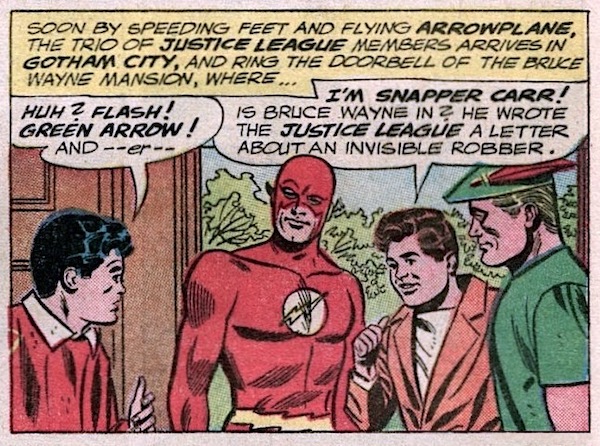
 I’ve been trying for a while to finish a big piece on the recent flood of comics
being adapted for television and film. One problem has been that I keep writing too much about a specific movie or show and then spinning that material off into its own review. The silver lining is that the flood is only picking up pace — so even as I constantly kick the metaphorical can down the road there’ll be no shortage of hooks
to keep the subject current.
 This post is currently down for maintenance.
 This post is currently down for maintenance.
 This post is currently down for maintenance.
 This post is currently down for maintenance.
 This post is currently down for maintenance.
 This post is currently down for maintenance.
 This post is currently down for maintenance.
 This post is currently down for maintenance.
 This post is currently down for maintenance.
I’m afraid that I don’t have much nice to say about...
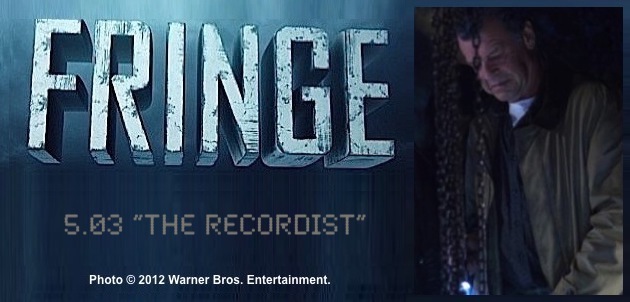
The episode was a letdown, overall — just sort-of meh, really, as opposed to spectacularly bad in ways that prompt their own kind of commentary. I can’t recall when (if ever) Fringe left me feeling that way before. Has it frustrated me? Yes. Has
it grossed me out? For sure. Has it turned in a lackluster installment that felt like the script needed, minimum, one more pass? Dunno ’bout that.
Which is a particular shame given how, per my choice of Beatles title for this post, “The Recordist” kicks off what appears to be the impetus for at least a good early-to-middle chunk of this final, 13-episode season.
I was a little concerned about using up “Mother” this soon, as we’ll doubtless get another episode about the Olivia & Etta dynamic before Fringe is over; there are now fewer than a dozen episodes left, however, and I’ve learned not to be too precious
about such things.
Here, partly in honor of Walter’s addled state but largely because it’s all I’m able to put together, are some disjointed musings on...
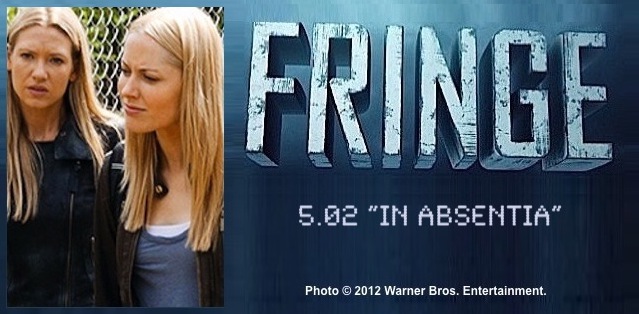
No Swedish or Portuguese, I promise.
With its fifth and final season, Fringe has entered a new dimension. Or is that descriptor inadvisable, lest the senses of the word be confused? The series has, of course, built much of its mythology on travel to a parallel Earth: Over There, a.k.a. the Other Side, home to doppelgangers of our heroes and villains. Instead, Fringe’s future lies in the actual — well, the fictional actual — future, as viewers had already been made aware through advance promotion and was seen on Friday night in the Season Five opener...
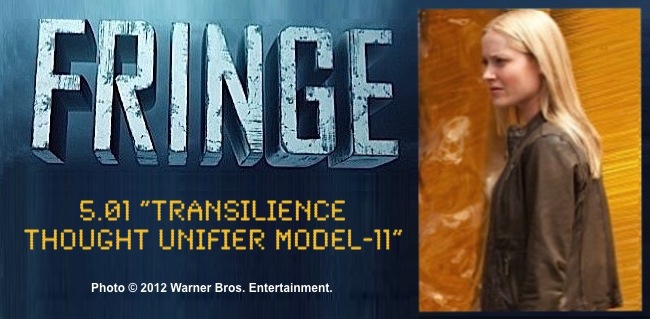
I’ll get back to the future shortly. First I want to welcome any new readers by way of giving these writeups (and their names) some context.
I find this post’s title most apt given the options, but Fringe’s Season Four premiere didn’t actually bring us back to the point at which the rewritten timeline we’re viewing diverged from the familiar one decades ago.

... picked up shortly after the Season Three finale, with Peter erased from reality due
to actions he undertook to save his native and adopted universes. Over Here and Over There both still exist; in fact, they coexist in the room that houses the First People’s machine — where members of each side’s Fringe Division meet to compare notes, as we see Olivia and her counterpart Fauxlivia do grudgingly.
Yeah, I’ve decided to write up some musings on the episode, despite the near certainty that I won’t be doing so weekly. Partly it’s an imperfect salve for the fact that I didn’t get to finish out the brief run that I began at the end of last season — not that there aren’t plenty of other unpublished or just plain unwritten posts in Blam’s Blog history whose absence irritates me — and partly it’s because if I do get to resume Fringe reviews I’ll likely appreciate having this as a foundation. In case you’re new to these posts, I should explain that having named my Lost analyses for Beatles tunes I decided to name my ‘Fringe’ Thinking installments for John Lennon songs (Beatles or solo); unfortunately, a few titles perfect for this post were already used for ‘Lost’ in Thought.
Here’s what got me cogitating:
I have my sister to thank for this most excellent video link featuring my favorite character on Glee, whose new season premieres at 8 p.m. ET tonight on Fox.
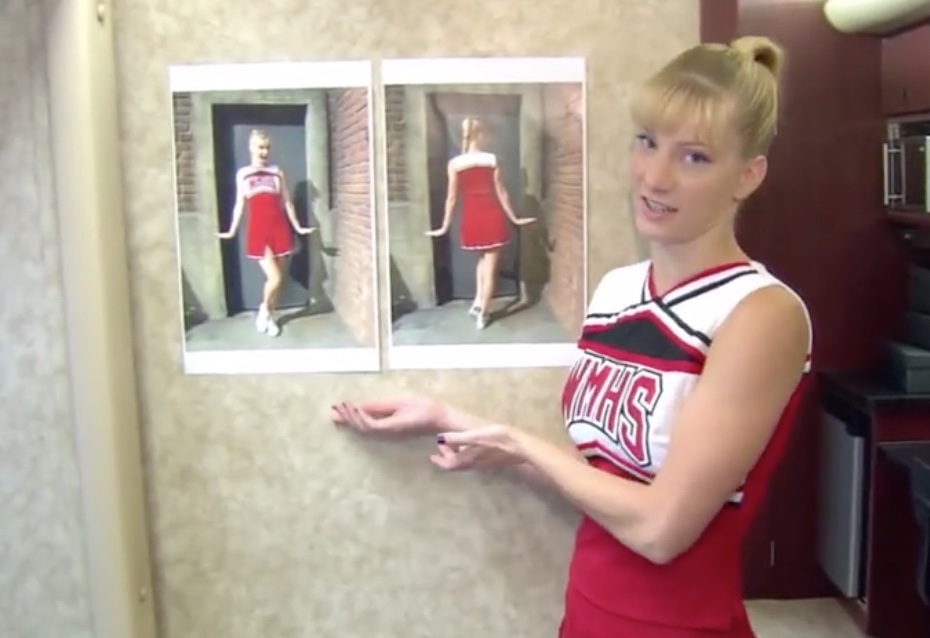 Video screenshot crop © 2011 Twentieth Century Home Entertainment.
Heather Morris does the voodoo that she does so well — and which I’ve praised before — in “A Day in the Life of Brittany S. Pierce” [5:45]. If you watch the show, you already know that you want to see this. If you don’t, you should still be able to enjoy it on its own; matter of fact, I dare you to watch until (or just skip to) the 0:39 mark, when Brittany explains why she’s riding a bike, and not want to continue.
Related: Nuts and Bolts • R2 Details • Nooner in Song
Video screenshot crop © 2011 Twentieth Century Home Entertainment.
Heather Morris does the voodoo that she does so well — and which I’ve praised before — in “A Day in the Life of Brittany S. Pierce” [5:45]. If you watch the show, you already know that you want to see this. If you don’t, you should still be able to enjoy it on its own; matter of fact, I dare you to watch until (or just skip to) the 0:39 mark, when Brittany explains why she’s riding a bike, and not want to continue.
Related: Nuts and Bolts • R2 Details • Nooner in Song
 Photo of Jay Walker's Library: Andrew Moore for Wired © 2008.
This post is currently down for maintenance.
Photo of Jay Walker's Library: Andrew Moore for Wired © 2008.
This post is currently down for maintenance.
And the end of Fringe Season Three, including what may be the final showdown in
the series’ Two-Worlds War, begins.
I’m not sure how much there is to say about the events of...

... that won’t be rendered moot by next Friday. So while I can’t help but ask a few burning questions, I won’t really try to answer them, either, instead sticking to some random reactions and tangential tidbits. Here they are in the order of their prompts throughout the episode.
Yes, “Mind Games” it will be, since “Lucy in the Sky with Diamonds” felt both a little
too on the nose and not really descriptive of ...

I’m going to try to blog weekly on Fringe, quite possibly my favorite TV experience
of the moment, as I said the other day in recapping the past couple of seasons. My oft-cited online problems and innately unpredictable abilities mean no guarantees, although I suspect that having gotten a new overview of the show out of the way will help. Now, better late than never, I offer my thoughts on one of the most intriguing
and most disappointing installments of this excellent series to date.
 I’d been planning to write up the last three Fringe episodes of this season, which reportedly form one continued story, to quell persistent requests made by friends and as practice for potential weekly reviews come autumn now that Fox has renewed the show. A few things conspired to convince me that it was a good idea to start early with last night’s episode. Here’s a bit of background to save us all from recap fatigue in future chapter-specific editions.
My initial essay on Fringe — an earlier post on its glyphs notwithstanding — came midway through Season Two. While I’ll run down some of the salient plot points that have taken center stage since then, it provides a good overview of my thoughts on the first half of the series to date. To folks reading this who are unfamiliar with the show: You’re going to be confused, for sure, and you’re missing an excellent television experience. I highly recommend catching up via downloads or DVD; both Fringe and Supernatural (which is nearing the conclusion of a welcome albeit weak-by-comparison season a year after many expected it to wrap entirely) are worthy successors to the very best of The X-Files and choice viewing not just for “genre” fans but for anyone who enjoys great character work played out through superbly inventive storytelling.
 Glee last week was in many ways not at its best but at its most — at its most plot-oriented, at its most gimmicky, at its most disposable, at its most thematic, at its most randy, at its most heartfelt, and as the previous contradictions indicate at its most all-over-the-place. Case in point: John Stamos on drums while the unlikely members of McKinkley High’s celibacy club — Rachel, Quinn, Puck(!) — joined their literally virginal, newlywed guidance counselor Miss Pillsbury to perform one of my favorite tunes, Starland Vocal Band’s “Afternoon Delight” [3:02].

