 Photo of Jay Walker's Library: Andrew Moore for Wired © 2008.
This post is currently down for maintenance.
Photo of Jay Walker's Library: Andrew Moore for Wired © 2008.
This post is currently down for maintenance.
And the end of Fringe Season Three, including what may be the final showdown in
the series’ Two-Worlds War, begins.
I’m not sure how much there is to say about the events of...

... that won’t be rendered moot by next Friday. So while I can’t help but ask a few burning questions, I won’t really try to answer them, either, instead sticking to some random reactions and tangential tidbits. Here they are in the order of their prompts throughout the episode.
Yes, “Mind Games” it will be, since “Lucy in the Sky with Diamonds” felt both a little
too on the nose and not really descriptive of ...

I’m going to try to blog weekly on Fringe, quite possibly my favorite TV experience
of the moment, as I said the other day in recapping the past couple of seasons. My oft-cited online problems and innately unpredictable abilities mean no guarantees, although I suspect that having gotten a new overview of the show out of the way will help. Now, better late than never, I offer my thoughts on one of the most intriguing
and most disappointing installments of this excellent series to date.
 I’d been planning to write up the last three Fringe episodes of this season, which reportedly form one continued story, to quell persistent requests made by friends and as practice for potential weekly reviews come autumn now that Fox has renewed the show. A few things conspired to convince me that it was a good idea to start early with last night’s episode. Here’s a bit of background to save us all from recap fatigue in future chapter-specific editions.
My initial essay on Fringe — an earlier post on its glyphs notwithstanding — came midway through Season Two. While I’ll run down some of the salient plot points that have taken center stage since then, it provides a good overview of my thoughts on the first half of the series to date. To folks reading this who are unfamiliar with the show: You’re going to be confused, for sure, and you’re missing an excellent television experience. I highly recommend catching up via downloads or DVD; both Fringe and Supernatural (which is nearing the conclusion of a welcome albeit weak-by-comparison season a year after many expected it to wrap entirely) are worthy successors to the very best of The X-Files and choice viewing not just for “genre” fans but for anyone who enjoys great character work played out through superbly inventive storytelling.
I really need to write about Fringe more often. A couple of friends have been urging me to do periodic if not weekly reviews, but that’s almost certainly not in the cards. While I’m hoping to publish at least some thoughts about what’s happened on the show since my first major post on it this time last year, soon, right now I just want to finally clear my metaphorical desk of several images that have been on the docket to share for nearly that long.
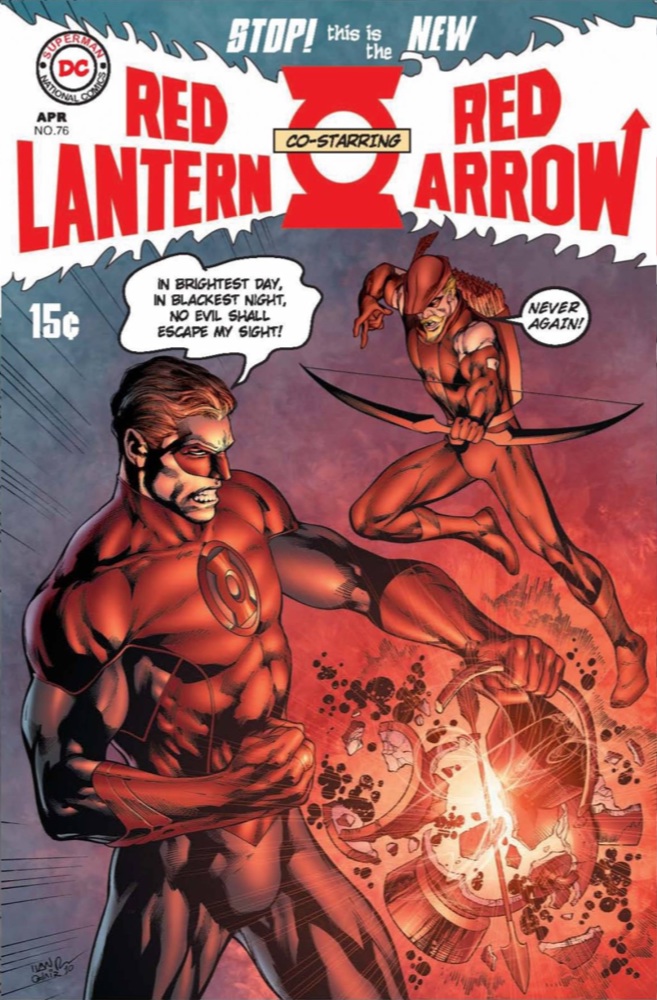

The week after I finally got that piece up, Fox aired one of Fringe’s best episodes — confirming Peter Bishop’s origins and blowing the show’s mythology wide open. “Peter” was a flashback to 1985, with awesomely retro opening credits; it showed the Walter Bishop of the standard Fringe universe spying upon the denizens of a parallel universe whose history and technology were slightly divergent from the familiar but which was inhabited largely by close counterparts of Fringe’s Earth. Later in the season Peter Bishop returned to the alternate universe in the present day, and in Part Two of May’s season finale “Over There” we saw some intriguing framed comic-book covers in his room.

